
Whether you are looking in the mirror or struggling to catch your breath during a workout, your nose plays a starring role in both your confidence and your quality of life. For many, the word “rhinoplasty” immediately brings to mind cosmetic refinement—straightening a bridge or narrowing a tip. However, the reality of this procedure is much deeper than the skin level.
While aesthetic goals are common, a significant number of patients seek a functional rhinoplasty because the architecture of their nose is limiting their ability to breathe. From a deviated septum to nasal valve collapse, structural obstructions can make every breath feel like a struggle.
Does rhinoplasty help with breathing? It can, depending on what is causing the blockage. For some patients, surgery can address structural problems inside the nose while also changing its appearance.
What Is Rhinoplasty?
Often referred to as a “nose job,” rhinoplasty is a surgical procedure that modifies the bone, cartilage, and internal structures of the nose. While widely recognized for achieving facial aesthetics, its true scope is far more comprehensive, focusing on the intricate framework that allows you to breathe. The procedure is generally performed once the nose has finished developing, usually by the late teens. Surgery for medical reasons still ensures the nose remains a balanced, healthy, and proportional feature of the face.
Cosmetic vs. Functional Rhinoplasty
It is important to understand the distinction between the two primary goals of the surgery:
- Cosmetic Rhinoplasty: Focuses on facial harmony, such as refining the tip, correcting a bridge bump, or adjusting the size to better suit the face.
- Functional Rhinoplasty: Focuses on repairing internal defects—such as a collapsed nasal valve or a structural deformity—to restore or improve proper airflow.
In many cases, these two goals overlap. For instance, a surgeon may perform a rhinoplasty to correct a deviated septum while simultaneously refining the external bridge. Modern techniques prioritize this balance, ensuring that any visual changes also support, or even improve, your ability to breathe easier. By addressing both the structural “plumbing” of the nose and its outward appearance, a tailored surgical plan can provide a life-changing improvement in both comfort and confidence.
How Rhinoplasty Can Help with Breathing
While we often think of the nose primarily as a facial feature, it is actually a sophisticated gateway for your respiratory system. Its primary job is to filter, warm, and humidify the air you breathe before it reaches your lungs. When the internal architecture of the nose is misaligned, narrowed, or weakened, this vital process is disrupted, and airflow becomes restricted.
Unlike temporary fixes such as nasal sprays or strips, which only address the symptoms of congestion, functional rhinoplasty for breathing corrects the structural issues that block or limit airflow at the source. This surgical approach targets the internal framework to ensure the path is clear. This provides a long-term solution to mechanical breathing obstructions and allows you to breathe effortlessly.
Different Ways Rhinoplasties Can Improve Your Breathing
Because the source of a breathing struggle varies from person to person, surgeons utilize different types of nose surgery to help patients breathe easier. Functional improvement is one of the most compelling reasons to undergo the procedure, particularly for those who experience:
- Exercise Intolerance: Struggling to get enough oxygen through the nose during a workout.
- Sleep Disruption: Chronic snoring or waking up with a dry mouth because of forced mouth-breathing.
- One-Sided Obstruction: A feeling that one nostril is perpetually “plugged.”
- Persistent Congestion: Internal blockage that doesn’t respond to allergy medications or nasal sprays.
During a professional evaluation, a surgeon will use specialized tools to examine the nasal passages to identify exactly where the airflow is being restricted. Depending on your specific diagnosis and the results of your physical examination, your procedure may involve a combination of the following precision techniques.
Rhinoplasty for Deviated Septum
This is one of the most common functional corrections. By centering the wall of bone and cartilage that divides your nostrils, a rhinoplasty for deviated septum ensures that both nasal passages are balanced and open, eliminating that frustrating sensation of one side being permanently blocked.
Correcting Nasal Valve Collapse
The nasal valve is the narrowest point of your airway. If the cartilage here is naturally weak or has been compromised by age or previous injury, it leads to nasal valve collapse, where the nostrils cave inward every time you take a deep breath. Surgery reinforces these sidewalls, often using small cartilage grafts to keep the “valves” structurally sound and open.
Reducing Enlarged Turbinates
Turbinates are long, thin structures inside the nose that help humidify the air you breathe. However, if they become chronically swollen due to genetics or long-term inflammation, they act like a closed door in a hallway. Carefully shrinking these structures creates immediate, significant space for air to flow.
Clearing Physical Obstructions
In some cases, breathing is hindered by physical “roadblocks” such as nasal polyps or internal scar tissue from past injuries. A functional rhinoplasty can clear these obstructions, restoring a smooth, direct path for oxygen.
Supporting Narrow Passages
Some individuals are simply born with a very narrow internal framework. In these instances, the surgeon may use structural grafting to widen the internal bridge or support the tip. This ensures the nose isn’t just aesthetically pleasing, but structurally capable of supporting healthy airflow.
Because these techniques are highly specialized, the first step toward breathing easier is always a comprehensive consultation.
What to Expect at Rhinoplasty Consultation
Determining the best path to better breathing begins with a thorough evaluation by a qualified facial plastic surgeon. Since every nose is architecturally unique, a consultation is essential to confirm your candidacy and pinpoint the exact cause of your airflow restriction. During this visit, Dr. Angelos will perform a comprehensive assessment designed to bridge the gap between how you feel and what is happening structurally.
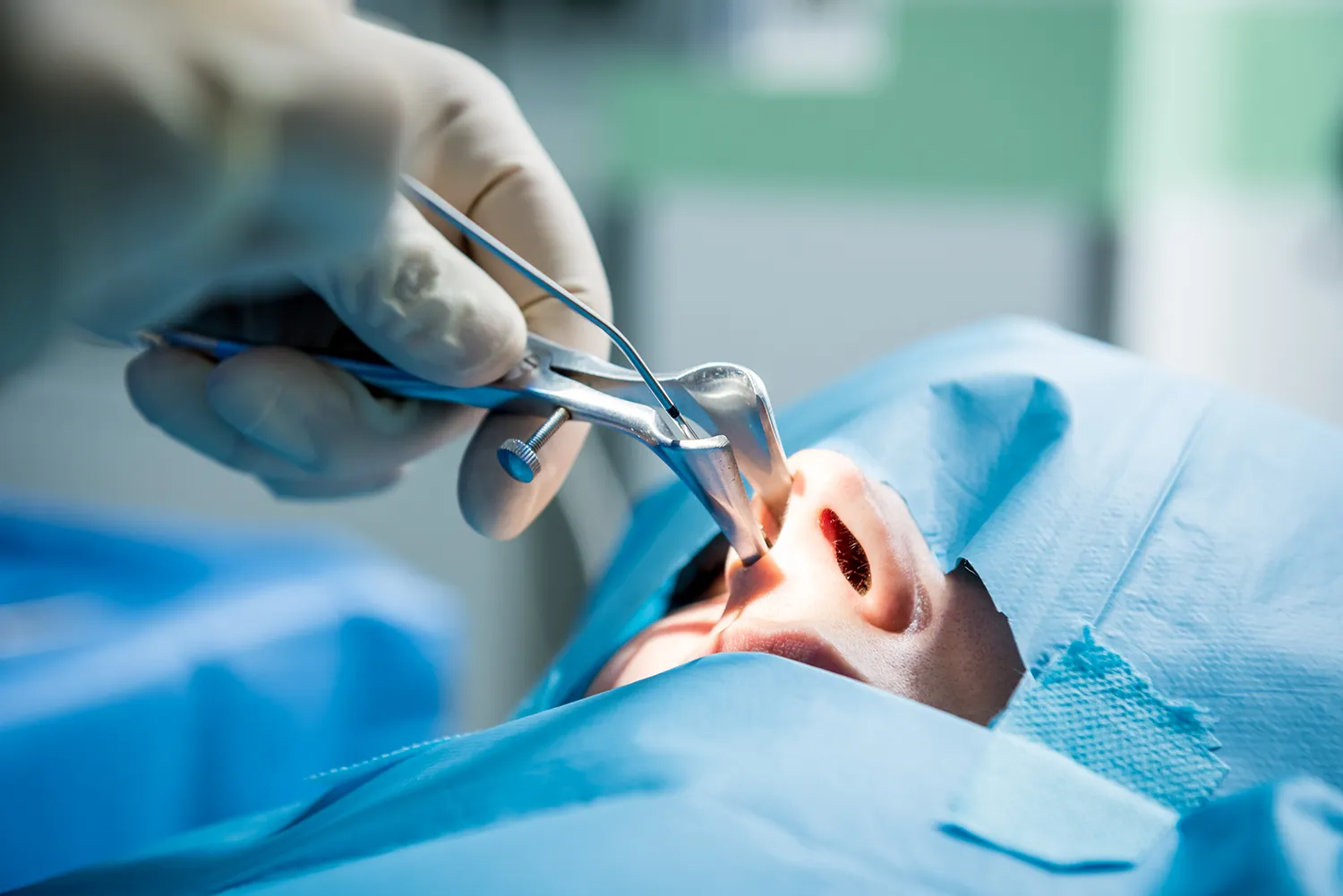
This process typically begins with a detailed discussion of your symptoms, focusing on whether your breathing difficulty is constant, worse at night, or triggered by physical activity. This is followed by a physical examination of the nasal structures, where the surgeon uses specialized lighting and tools to inspect the internal framework for a deviated septum, enlarged turbinates, or signs of nasal valve collapse.
After a thorough review of your medical history to ensure a safe procedure, Dr. Angelos will develop a personalized surgical plan. This tailored approach maps out exactly how the functional rhinoplasty will resolve your breathing obstructions, while simultaneously helping achieve any aesthetic goals you may have.
Finding a Plastic Surgeon in Charleston for a Rhinoplasty to Help with Breathing
Rhinoplasty offers more than just a visual change; it is a vital adjustment to your everyday comfort. For patients who have spent years struggling with nasal passage issues, a functional rhinoplasty provides a permanent solution that temporary treatments simply cannot match. When performed by an experienced surgeon, the procedure enhances both form and function, allowing you to move through the world with a profile you love and the ability to breathe effortlessly.
Ready to breathe easier? Contact Charleston Plastic Surgery today to schedule your personalized consultation and take the first step toward better health and renewed confidence.